
Nikon Coolpix P50 Review
Review Date: December 17th 2007
Author: Gavin Stoker
Leave a comment about this Review
|
Introduction
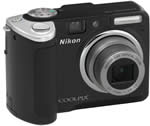
The Nikon Coolpix P50 is an 8 megapixel compact digital camera with a wide-angle 28-102mm, 3.6x zoom lens, new EXPEED image processing engine and a versatile ISO range of 64-2000. Available in the stylish black version that we tested or a more consumer silver, the Coolpix P50 also offers a 2.4 inch LCD screen and true optical viewfinder, AA-size batteries, Electronic Vibration Reduction, Face Detection and Manual shooting mode. Looking a lot like the more expensive Coolpix P5100 model, the P50 now costs less than �150 in the UK, potentially making it great value for money. But does the image quality match the impressive list of features? Gavin Stoker tested the Nikon Coolpix P50 to find out...
Compare Prices
Support PhotographyBLOG: Buy the Nikon Coolpix P50 from one of our affiliate retailers:Ease of Use
With all the attention and focus on Nikon's budget, mid range and pro-end DSLRs � the areas in which the company truly excels � its latest compacts have seemingly been ushered out with more of a hopeful whimper than a bang. The Coolpix P50 is a case in point, being the latest low-key release, but it perhaps deserves better. It boasts an 8 megapixel resolution, light sensitivity up to a better-than-average ISO 2000, 3.6x wide angle zoom (equivalent to 28mm-102mm in 35mm terms), and can be found for a scarcely believable �150 in the UK (�199 official RRP), which appears like great value on the face of it. The P-series styling also apes Nikon's attractively fashioned and positively reviewed P5100, although unsurprisingly given its price the P50 is both physically larger and less feature-packed.
In truth the Nikon Coolpix P50 can be viewed as an entry-level model cloaked in an outward air of sophistication, thanks to little details like the spongy, leather-look detailing on the grip that houses two bog standard AAs � not to mention the matt black bodywork of our review sample that not-so-subconsciously recalls a fully-fledged DSLR (as does the new 'Expeed' processor � found in the D300/D3 � powering things inside). Not one for hyperbole, Nikon describes the Coolpix P50's look as 'orthodox'. As this isn't an enthusiast model however, you get 'electronic' Vibration Reduction (in-camera image processing to disguise camera shake) rather than the proper lens or CCD shift variety � a hit and miss state of affairs as it transpires, that can only truly be forgiven by the fact of the P50's inexpensiveness.
With its batteries loaded, the compact still feels surprisingly lightweight, the rounded grip meaning it's more suitable for slipping in jacket than jeans pocket. One immediate gripe though is the fact that the full manual is on CD ROM � you only get a rudimentary start guide to peruse out of the box, which feels like penny pinching and is a pain if you're mugging up on a plane trip to your holiday destination. The business-like front of the Nikon Coolpix P50 is dominated by that 3.6x optical zoom, above which, and to the left, is the window for the built-in optical viewfinder � increasingly unusual on a digital camera of this price and class. It's small however, and, as you try to bring your eye level with it, your nose unfortunately butts up against and smears the rear 2.4-inch LCD screen � the quality of which could be best described as reasonable, as it appears as if everything is being viewed through a thin layer of film. That said, menu options are clean and clearly laid out, mixing text and familiar icons.
 |
 |
| Rear Controls | Top Controls |
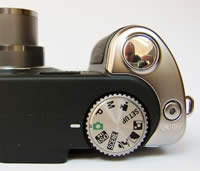
Still at the front and to the right is an orange glow bulb for the self-timer indicator and AF assist light. At the very far right again � this time perilously close to the lens � is a larger but narrower bulb for the built-in flash, beneath which is a squint-or-you'll-miss-it pinhole for a microphone. Atop the Nikon Coolpix P50 there's no mistaking the large and springy shutter button located on the front slope of the handgrip, behind which is a small on/off button that glows attractively with a green light when the camera's powering up, to the left of which � and slightly recessed � is a familiar mode wheel. The options here have been pared down to full auto, program or manual modes, plus video mode, set up mode, night scene, landscape, portrait (with the now ubiquitous face priority functionality), a smattering of pre-optimised scene mode/s and a dedicated high ISO setting (although up to ISO 2000 is manually selectable if you turn the dial to program or manual modes). Due to inherent image noise, the latter setting often just has the effect of making everything look as if it is being viewed through a drizzle of sand.
Press the aforementioned power button and the Nikon Coolpix P50 powers up for action in a couple of seconds, the lens extending to maximum wideangle with a low mechanized whirr and the image on the rear LCD fading slowly into focus in a manner that recalls that over-used movie shorthand for a character waking up after being drugged. Go ahead and press the shutter release button to its halfway point so the camera can quickly determine focus and exposure and you'll find there's little in the way of shutter delay, though the two to three seconds it can take to write a full resolution JPEG to card feels a little leisurely.
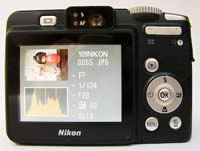
The back of the camera is naturally dominated by the LCD screen, above which is an optical viewfinder and, to the immediate left, a dedicated button for calling up or deactivating the screen displays. You get the option to have all the key settings in use up on screen, turn off everything except leave the chosen mode displayed, or summon up a standard nine zone compositional grid. Curiously a further press doesn't turn off the LCD entirely � useful, for example, if you wanted to save battery life by using the optical viewfinder for shot composition instead. Also at the Nikon Coolpix P50's rear is a narrow rocker switch for the zoom that falls readily under the thumb as you position your finger over the main shutter button. Operation of the zoom itself is smooth and steady, though again with an audible mechanical buzz that we've described in the past as sounding like a small insect hovering close to your ear � albeit less irritating and unlikely to give you malaria.
 |
 |
| Memory Card Slot | Battery Compartment |
Keeping things simple, further controls include an obviously marked button for accessing image playback (a range of in camera correctional effects includes red eye fix and Nikon's exposure adjusting D-Lighting function), beneath which is a four-way control pad with central OK button for effecting changes to chosen menu settings. Unsurprisingly a dedicated menu button sits just below this, and � usefully, given the P50's beginner-friendly status � you also get a delete button for dispatching unwanted mistakes. Ranged around the four-way controller are means of accessing the flash mode/s, self timer, macro or infinity focus mode, and adjusting exposure compensation � all of which are of adequate size and 'purchase', and actively respond to the touch.
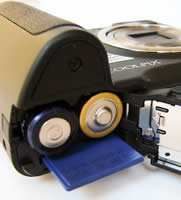
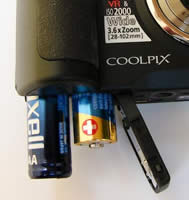
Moving to the right hand flank of the camera � if still viewed from the rear � a covered AV out and USB port is discovered, hiding beneath a loop for attaching the supplied wrist strap. At the opposite side of the P50 nestles a built in speaker that provides tinny but adequate sound. The base of the Nikon Coolpix P50 features a screw thread for attaching a tripod, a slide and open lid that hides the compartment for the twin AAs and (optional) Secure Digital card, while there's a further port for attaching the supplied multi purpose AV and USB cable. Battery life is pretty much as expected given that everything is running on AAs � meaning that I found they were almost spent after a couple of afternoons' use, and just over 100 shots.
So what of the image themselves, does the Nikon Coolpix P50 deliver results that transcend its entry level ease of use and price tag, or fall short of expected? Take a look at the next page to find out.
|
 PhotographyBLOG
is a member of the DIWA
organisation. Our test results for the Nikon Coolpix P50 have been submitted to DIWA
for comparison with test results for different samples of
the same camera model supplied by other DIWA
member sites.
PhotographyBLOG
is a member of the DIWA
organisation. Our test results for the Nikon Coolpix P50 have been submitted to DIWA
for comparison with test results for different samples of
the same camera model supplied by other DIWA
member sites.