
Panasonic Lumix DMC-TZ5 Review
Review Date: May 12th 2008
Author: Mark Goldstein
Leave a comment about this Review
|
Introduction
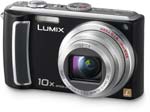
The Panasonic Lumix DMC-TZ5 is a new version of Panasonic's best-selling camera of 2007, the DMC-TZ3, an ultra-compact superzoom with a 10x, 28-200mm lens. Just one year later, the new DMC-TZ5 retains the same Leica-branded lens and optical image stabilisation system, but offers a small number of significant improvements. The megapixel count has gone up from 7 to 9, using a marginally larger sensor, and the 3 inch LCD screen's pixel count has doubled from 230K to 460K pixels. If you like to shoot movies with your compact camera, the main attraction of the Panasonic DMC-TZ5 will be the 720p, 16:9 ratio HD video mode, which can shoot 1280x720 pixel video at 30fps. For still photographers, the Venus IV Engine processing engine promises improved low-light performance, longer battery life and enhanced responsiveness. With a price-tag of �299 / $349, Mark Goldstein discovered if the DMC-TZ5 can follow in the footsteps of its esteemed predecessor...
Compare Prices
Support PhotographyBLOG: Buy the Panasonic Lumix DMC-TZ5 from one of our affiliate retailers:Ease of Use
The Panasonic Lumix DMC-TZ5 is virtually identical to the older DMC-TZ3 in terms of its design, so a lot of the comments that we made in our review of that camera will be repeated here. At first glance the Panasonic Lumix DMC-TZ5 strikes you as being a little large, elongated and bulky, feeling similar in size to the Canon "A" series cameras, although it's actually a little slimmer and lighter than the TZ3 model. Then you have to remind yourself that Panasonic have somehow fitted in a 10x zoom lens equivalent to 28-280mm on a 35mm camera. Other models of this size typically offer a 3x or 4x zoom lens. Even when set to 280mm, the lens doesn't extend too far from the front of the TZ5, looking to all intents and purposes like a "normal" camera. This helps to make the DMC-TZ5 a great candid camera, as people assume that it's just a standard point and shoot model. The 28mm focal length provides an entirely new wide angle of view that can only increase your creativity. Take it from me, you won't want to go back to a "standard" 35mm zoom after using the 28mm lens on the DMC-TZ5. The 10x zoom lens obviously makes this one of the most versatile compacts in terms of focal range, especially as it is coupled with Panasonic's excellent Mega O.I.S system, which helps to ensure that the majority of photos taken in good light are sharp. The TZ5's lens isn't particularly fast at the wide-angle setting with a maximum apertures of f/3.3, but f/4.9 at the 280mm telephoto setting is respectable enough.
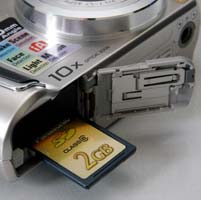
The DMC-TZ5 is a well-built camera with a high quality metal body. The design is dominated by the large 10x lens on the front and the massive 3 inch LCD screen on the rear. There is no optical viewfinder, which follows a recent trend in digital cameras, and this does make the camera a little harder to keep steady at the telephoto end of the zoom than holding it up to your eye. The combination of chunky hand-grip with a textured plastic strip, 3.6cm thick body and 215g weight partly make up for this. The DMC-TZ5 is well-made overall, although there are a couple of external controls that don't instill much confidence. The cover for the battery compartment and SD card slot feels a little insubstantial and is locked using a cheap plastic switch, whilst the plastic tripod socket is positioned in the bottom-left corner of the camera, which doesn't make it very stable on a tripod. Also, depending on the size of your hands, it can be quite easy to block the flash or AF-assist lamp with your fingers without realising until you have taken the picture.
As this is purely a point and shoot camera with no manual controls, the Panasonic Lumix DMC-TZ5 is not overly complex in terms of the number of external controls that it has. The majority of the 13 controls are clearly labeled and common to most cameras, with the E.Zoom and Q.Menu buttons and iA mode being specific to Panasonic and requiring a quick read of the user guide. There's a traditional dial on the top of the camera that lets you select the various shooting and scene modes. This dial is a typical feature of SLR cameras, and enables you to quickly change between the various modes. Interestingly there are two Scene modes available, both of which offer exactly the same options, but which can be set independently of each other, allowing a little customization of the camera setup. Also found on the top of the camera are the on/off switch, zoom lever, shutter button and the new E.Zoom button, which cleverly zooms to the full telephoto focal length at a much faster speed than normal (and then back to wide-angle with a second push). Very useful if you need to quickly zoom in on a far-away subject. Unfortunately Panasonic have confused things slightly by mixing in Extra Zoom (read the next section) with the E.Zoom feature, as a second press of the E.Zoom button automatically activates the 16.9x zoom, 3 megapixel setting (annoyingly this can't be turned off).
The Extra Zoom feature (not to be confused with the E.Zoom button) from the DMC-TZ3 has been retained, which basically works by digitally increasing the zoom from 10x up to a maximum of 16.9x by only using the central part of the image. To achieve that increase, though, a smaller image size has to be selected by the user. Choosing the 3 megapixel mode means that you can zoom up to 16.9x, whilst 5 megapixel provides a 13.5x zoom, and 7 megapixel is 11.3x (all in the 4:3 aspect ratio) . Fairly useful if you don't mind the decrease in resolution, but you do have to set the camera to the right picture size before the extra zoom function works. It would have been a much better system if the camera intelligently increased the zoom and then decreased the size of the image. When activated, EZ is displayed next to the horizontal zooming scale.
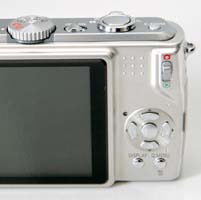
One easily-overlooked but significant improvement on the DMC-TZ3 is the addition of a Camera / Play button on the rear, which enables you to quickly and easily switch from shooting to playback without also changing the shooting mode. Also on the rear of the camera is a new Q.Menu button (formerly the Func button on the TZ3), which is a very welcome addition, as it provides quick access to most of the principal controls, including ISO speed, image size, image quality and white balance (there are 9 settings in total). You can still access all of these options from the main menu system too. Optical image stabilisation, which could previously be turned on and off via a button on top of the DMC-TZ3, is now only accessible through the DMC-TZ5's menu system. This isn't really a problem in practice, as I left it turned on for 99% of the time without negatively affecting the battery life.
 |
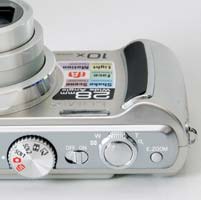 |
| Rear Controls | Top Controls |
The very large 3 inch LCD screen is the only way of framing your shots, so if you have to have an optical viewfinder, look elsewhere now, but I found that the new 460K pixel, high-resolution screen coped admirably with the majority of lighting conditions. This screen is a great improvement on the TZ3's, even being nice to use in low-light. There's a clever function called High Angle, accessible from the Quick Menu, which essentially brightens the LCD screen when the camera is held over your head so that it is perfectly viewable, which is great for shooting over the heads of a crowd. The Intelligent LCD function automatically detects the current lighting conditions and boosts the LCD backlighting by up to 40% when shooting outdoors in bright sunshine, helping to keep the screen visible.
First introduced on the FX series of cameras, the DMC-TZ5 features an enhanced version of Intelligent Auto Mode. Panasonic have tried to make things as easy as possible for the complete beginner by providing this shooting mode, which allows you to point and shoot the camera without having to worry about choosing the right mode or settings. Intelligent Auto Mode automatically determines a number of key criteria when taking a picture, including selecting the most appropriate scene mode (from 5 commonly used presets) and ISO speed, and turning face detection (up to 15 faces), image stabilization and quick auto-focus on. New additions to the Intelligent Auto Mode for the DMC-TZ5 are Intelligent Exposure, which increases exposure only in the under-exposed areas of the image, and Digital Red-eye, which automatically detects and removes red-eye. Intelligent Exposure can also be turned on in the Normal Picture mode (but strangely not Digital Red-eye). In practice the Intelligent Auto Mode system works very well, with the camera seamlessly choosing the most appropriate combination of settings for the current situation. The 5 available scene modes are Portrait, Landscape, Macro, Night Portrait and Night Scenery, so obviously not all situations are covered by Intelligent Auto Mode, but it does work for the majority of the time. It makes it possible for the less experienced photographer to easily take well-exposed, sharp pictures of people, scenery and close-ups by simply pointing and shooting the camera.
As with all current Panasonic models, this camera has an anti-shake system, dubbed Mega O.I.S. Turn it on and the Panasonic Lumix DMC-TZ5 automatically compensates for camera shake, which is a slight blurring of the image that typically occurs at slow shutter speeds when the camera is hand held. There are two different modes, Mode 1 is on all the time including image composition, and Mode 2 is only on when you press the shutter button. In practice I found that it does make a noticeable difference, as shown in the examples on the Image Quality page. You don't notice that the camera is actually doing anything different when anti-shake is turned on, just that you can use slower shutter speeds than normal and still take sharp photos. Thankfully leaving the anti-shake system on didn't negatively affect the battery-life, with the camera managing nearly 300 shots using the supplied rechargeable Li-ion battery.
Panasonic also provide a High Sensitivity Mode to help combat the effects of camera shake. When this scene mode is selected, the camera automatically raises the ISO speed up to a maximum of 6400 and therefore allows for a faster shutter speed. This mode allows you to handhold the camera without using the flash and get more natural results, whilst at the same time freezing subject movement more successfully. There are some obvious drawbacks with this special scene mode, principally a significant increase in noise and blurring - Panasonic state that "Pictures may appear slightly grainy due to high sensitivity". You also need to select the scene mode and therefore have some idea about when it is applicable to your subject.
The Intelligent ISO mode is the third way in which the DMC-TZ5 attempts to avoid subject blur in low-light conditions. The camera automatically sets the appropriate shutter speed AND ISO speed for the subject that you are taking pictures of. So if you're taking shots of a child indoors, the DMC-TZ5 automatically raises the ISO and in turn the shutter speed to avoid blurring the child's movement. If the subject is still, then the camera chooses a lower sensitivity and slower shutter speed. It's a clever idea that works well in practice, with the camera generally choosing an appropriate combination of shutter and ISO speed. You can also limit the maximum ISO speed that the camera can choose, which I'd strongly advise, as ISO 1600 produces very noisy images - ISO 800 is a better maximum setting. There is one small caveat with the Intelligent ISO mode - if you turn on the flash, the ISO speed only reaches 640, but overall it's a useful addition for natural low-light shooting.
 |
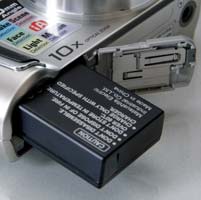 |
| Memory Card Slot | Battery Compartment |
The HD video capability of the DMC-TZ5 is one of the major new features of this model. The DMC-TZ3 offered 848x480 pixel widescreen recording, but the TZ5 takes things one step further with two 16:9 HD modes which record 720p video at 1280x720 pixels at 30 or 15 fps. Selecting this mode is more awkward than it should be, as you have to first select the 16:9 aspect ratio and then the 16:9H picture mode. Movies are saved in the Quicktime .MOV format, which is fine for the smaller sizes, but less so for the HD video - our 22 second sample movie is a whopping 70Mb, and you'll only be able to fit around 10 minutes of HD footage on a 2Gb SD card. Panasonic would have been better advised to employ a more efficient video codec. On a more positive note, sound is recorded during capture (although as with most digicams it's on the muffled side) and, like the original TZ1 but not the TZ3, you can now also use the zoom lens and really make the most of that 28-280mm focal range. Back to the minus points though, as you'll find that the lens zooms more slowly than when shooting a still image, and if you choose continuous auto-focus, areas of the video will be blurred before becoming sharp again as the camera tries to refocus. I also noticed thin white vertical lines appearing during both shooting and video-playback (you can see the effects of this in our sample video).
The main menu system on the Panasonic Lumix DMC-TZ5 is straight-forward to use and is accessed by pressing the Menu/Set button in the middle of the navigation pad. There are two menu options, Record and Setup. Most of the camera's main options, such as white balance, image quality, auto-focus mode and ISO speed, are accessed here, so the Record menu has 18 options spread over 4 screens and the Setup menu has 23 options spread over 5 screens. As mentioned previously, the addition of the Quick Menu button on the rear of the camera speeds up access to some of the more commonly used options. Due to the large LCD screen and restricting the number of on-screen choices to five, the various options and icons are very clear and legible. If you have never used a digital camera before, or you're upgrading from a more basic model, reading the easy-to-follow manual before you start is a good idea, especially as a few of the buttons are specific to Panasonic cameras. Thankfully Panasonic have chosen to supply it in printed format, rather than as a PDF on a CD, so you can also carry it with you for easy reference.
The start-up time from turning the Panasonic Lumix DMC-TZ5 on to being ready to take a photo is quick at around 1.5 seconds. Zooming from the widest focal length to the longest is very slow at around 4 seconds, although using the new E.Zoom button speeds this up to less than 3 seconds. Focusing is quick in good light and the camera achieves focus most of the time indoors or in low-light situations, helped by the focus-assist lamp. Note that the camera does struggle to lock onto the subject at the tele-photo end of the lens in low-light situations. The camera is very quick to find focus if you use the 1-point high-speed AF option. It takes about 1 second to store an image, allowing you to keep shooting as they are being recorded onto the memory card - there is no LCD blackout between each image. The Panasonic Lumix DMC-TZ5 has a disappointingly slower Burst mode than the DMC-TZ3, which enables you to take 2.5 frames per second at the highest JPEG image quality, up to a maximum of 5 images in Standard mode and just 3 images in Fine mode. There is also a Free Burst mode, which allows you keep shooting until the memory card is full, but only at around 1.8fps.
Once you have captured a photo, the Panasonic Lumix DMC-TZ5 has a good range of options when it comes to playing, reviewing and managing your images. You can instantly scroll through the images that you have taken, view thumbnails (up to 30 onscreen at the same time and in a special Calendar view), zoom in and out up to 16x magnification, view slideshows, delete, protect, trim, resize, copy and rotate an image. You can also select favourite images, sort images into categories, change an image's aspect ratio, add a text stamp, add a soundclip and set the print order. Dual Play is a great option that takes advantage of the big LCD screen by allowing you to compare two images onscreen at the same time. The Display button toggles detailed settings information about each picture on and off, such as the ISO rating and aperture / shutter speed, and there is a small histogram available during both shooting and playback. When taking a photo, pressing the Display button toggles between the detailed information, the detailed information plus gridlines to aid composition, and no information at all.
In summary the Panasonic Lumix DMC-TZ5 carries on where the TZ3 left off - this is an equally simple-to-use, responsive mid-sized camera with the obvious defining feature of that 10x zoom, wide-angle, image stabilized Leica lens.
|
 PhotographyBLOG
is a member of the DIWA
organisation. Our test results for the Panasonic Lumix DMC-TZ5 have
been submitted to DIWA
for comparison with test results for different samples of
the same camera model supplied by other DIWA
member sites.
PhotographyBLOG
is a member of the DIWA
organisation. Our test results for the Panasonic Lumix DMC-TZ5 have
been submitted to DIWA
for comparison with test results for different samples of
the same camera model supplied by other DIWA
member sites.